Battery Energy Storage System (BESS) in Bangalore Less diesel. No downtime.
A battery energy storage system stores power from your solar plant or the grid and releases it when you need it: during power cuts, in the evening peak, or whenever your diesel generator would otherwise start.
- Keep critical loads running through power cuts, with switchover in milliseconds
- Cut diesel generator running hours, fuel and maintenance
- Use your daytime solar in the evening instead of exporting it
- Deye C&I cabinets of 61 kWh and 128 kWh, stackable home batteries, Feston hybrid inverters
- Sized from your load data, installed and commissioned by our engineers
Get a BESS sizing & proposal
Tell us what you need to run and for how long. An engineer will size the battery and inverter from your load.
Installation figures from Eltron's records, September 2020 to October 2026.
How a battery energy storage system works
A BESS has three parts: lithium iron phosphate (LFP) battery packs with a battery management system, a hybrid inverter or power conversion system (PCS) that charges and discharges them, and an energy management system that decides when to do each.
The battery charges from your solar plant during the day, or from the grid at off-peak hours. When the grid fails, it takes over your critical loads within milliseconds. When power is expensive, it discharges to reduce what you draw from the grid. Your diesel generator becomes the last resort, not the first.
For homes that mainly want backup during power cuts, see our hybrid solar systems with battery.
Six ways a battery earns its place
Most projects combine two or three of these. We look at your bills, outage history and generator logs to see which apply to you.
Power-cut backup
Production lines, servers, cold rooms and hospital equipment keep running through outages, with no restart losses or spoiled batches.
Diesel generator reduction
Short outages are covered by the battery, so the generator starts less often. A genset typically burns fuel worth ₹25 or more per unit at today's diesel prices.
Solar self-consumption
Store surplus daytime solar and use it in the evening. Essential where export is restricted, net metering is capped, or weekends leave solar unused.
Peak-hour savings
Karnataka's HT tariffs charge more for evening-peak consumption and give a rebate at night. A battery charged off-peak can carry the peak.
Demand-charge shaving
The battery covers short spikes from motors and compressors, so your maximum demand stays lower and you may be able to reduce your contract demand.
EV charging buffer
Fleet depots and charging stations with limited grid capacity can run faster chargers by drawing on stored energy. See Havells EV chargers.
Deye and Feston battery storage
We work with two brands so we can match the system to the job: Deye's proven C&I cabinets and stackable batteries, and Feston, a Chennai-based inverter maker now building storage in India.
Deye Global ESS manufacturer
Deye makes hybrid inverters and LFP batteries used in solar-plus-storage systems worldwide, and Eltron already installs Deye hybrid inverters and batteries in Bengaluru homes.
- SE-F series stackable low-voltage LFP batteries of about 5 kWh and up per module, up to 32 in parallel
- GE-F60 C&I cabinet: 61.44 kWh, 614 V LFP, IP55, rated for 6,000+ cycles, 10-year warranty
- GE-F128 outdoor cabinet: 128.6 kWh, 8,000+ cycles, up to 10 cabinets in parallel, pairs with 30–60 kW Deye hybrid inverters
Feston Made in India
Feston SEV is a Chennai-based solar inverter company. In April 2026 it announced its entry into battery storage with 3 GWh of planned manufacturing capacity, for systems from 5 kWh to 5 MWh.
- 3–6 kW single-phase hybrid inverters for low-voltage batteries: 10 ms switchover, 98% efficiency, up to 6 in parallel
- 10–20 kW three-phase hybrid inverters for high-voltage batteries: 100% unbalanced load, 150% overload, up to 15 in parallel
- Time-of-use scheduling, and old and new batteries supported on the same inverter
| System | Typical storage | Typical inverter / PCS | Good for |
|---|---|---|---|
| Home & small shopDeye SE-F or Feston LV + hybrid inverter | 5 – 20 kWh | 3 – 8 kW single-phase | Homes, clinics, shops, small offices |
| Small commercialDeye SE-F stack or HV battery + 3-phase hybrid | 20 – 60 kWh | 10 – 20 kW three-phase | Offices, restaurants, schools, apartments |
| Commercial & industrialDeye GE-F60 / GE-F128 cabinets | 61 – 1,280 kWh | 30 – 125 kW hybrid or PCS | Factories, hospitals, hotels, campuses |
| Large sitesMultiple cabinets with PCS and EMS | 1 MWh + | Project-specific | Industrial parks, EV hubs |
Specifications from Deye and Feston product literature. Model availability in India changes; we confirm the exact model, warranty and lead time in your proposal.
How big a battery do you need?
Start with the load you must keep running and for how long. The calculator adds the margins we use in real designs: 90% usable depth of discharge and system losses.
Indicative only. Assumes the load runs at the kW entered for the whole outage, outages no longer than your backup time, and 2.68 kg CO₂ per litre of diesel. It excludes the cost of recharging the battery and generator maintenance savings. Motor starting currents and unbalanced loads change inverter sizing; we confirm with a load study.
When a battery makes sense, and when it doesn't
Batteries are still a significant investment. We would rather tell you upfront if solar alone, or a smaller battery, will do the job.
A BESS usually makes sense if…
- You lose money in every power cut: production, cold chain, patients, guests
- Your diesel generator runs regularly for short outages
- You can't export solar, or your solar is wasted on weekends and holidays
- You pay evening-peak surcharges or high demand charges
- Grid capacity limits what you can connect, such as EV fast chargers
It may not pay back if…
- You're a home on net metering with rare power cuts: the grid already acts as your "battery" for free
- You want a battery purely to save on bills with a reliable grid and no time-of-day tariff
- You need many hours of backup for very large loads: a generator may still be needed alongside
- Your load can't be separated into critical and non-critical circuits
Designed for Bengaluru sites, not just catalogues
- LFP chemistry: lithium iron phosphate is the most thermally stable common lithium chemistry and is standard for stationary storage.
- Battery management system monitors every cell for voltage, temperature and current, and disconnects on faults.
- Fire safety: Deye's GE-F cabinets include fire detection and suppression; we plan ventilation, clearances and location.
- Protection coordination with your existing switchboard, DG set and solar inverters, so everything switches cleanly.
- Remote monitoring on the manufacturer's cloud platform, so you and we can see state of charge and faults.
One team from load study to handover
- Load study from your bills, outage history and, for larger sites, a power-logger reading
- Design: battery and inverter sizing, single-line diagram and critical-load segregation
- Supply of Deye or Feston equipment with manufacturer warranty
- Installation: civil base, cabling, protection, earthing and integration with solar and DG
- Commissioning and training for your staff, with monitoring login
- Service from our Bengaluru, Ballari and Kalaburagi branches
How a BESS project runs
Small systems take a few days to install. C&I cabinets depend on equipment lead time, usually a few weeks.
Load & outage review
Share 12 months of bills, your DG log and the loads you must keep running.
Site survey
Switchboard, space for cabinets, cable routes, existing solar and generator.
Design & proposal
Battery and inverter sizing, single-line diagram, savings and an itemised price.
Supply
Deye or Feston equipment ordered against your approved design.
Installation & integration
Mounting, cabling, protection, and integration with solar, grid and DG.
Commissioning
Switchover tests, EMS settings, monitoring login and staff training.
Battery storage and solar work by Eltron
The equipment we supply, and examples of the engineering behind our solar-plus-battery projects.
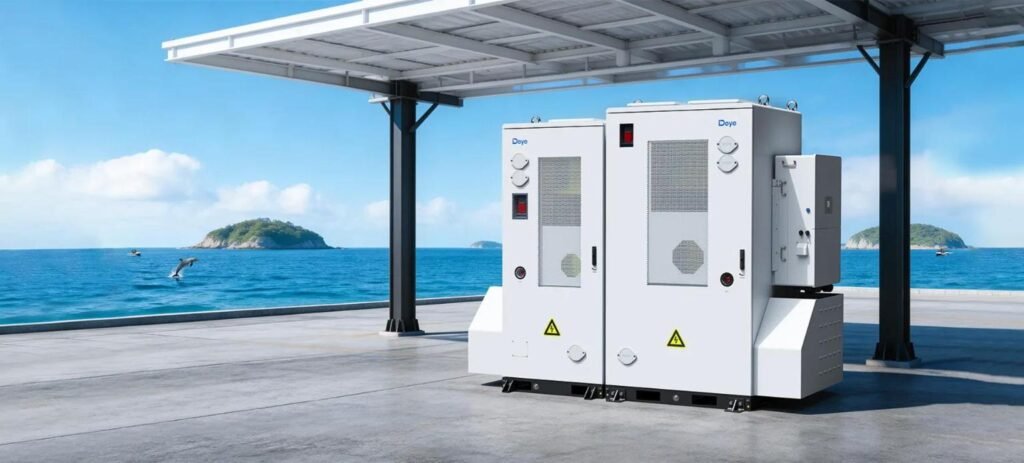
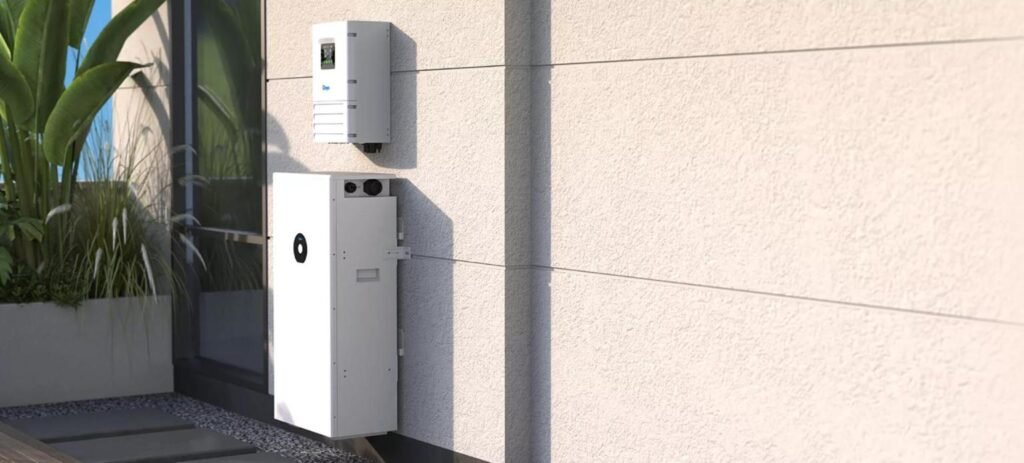
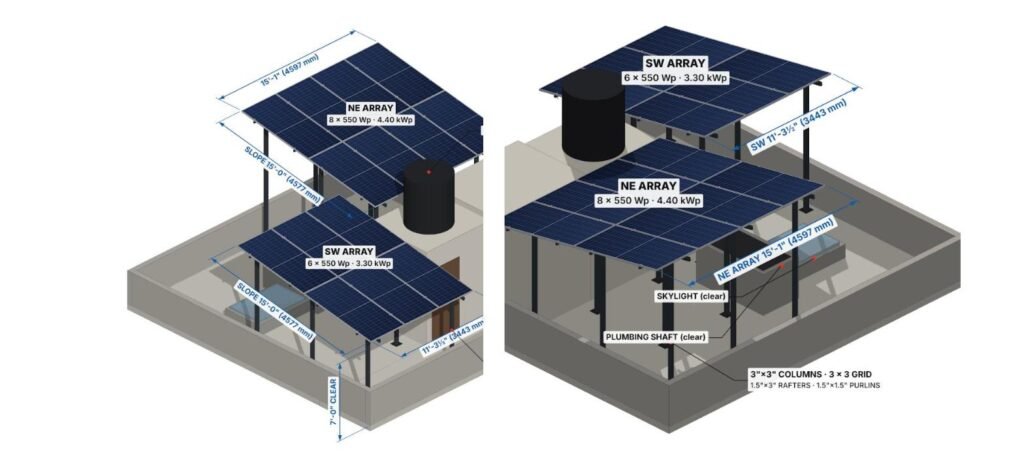
Product images are supplied by the manufacturer. Design images are drawings our engineers prepare for proposals; a design is not a completed project.
What Eltron customers say on Google
★★★★★“We recently completed a 65 kW solar power installation for our apartment complex with Eltron Energies, and the experience was outstanding from start to finish… The project was completed on time, and the energy savings have already started kicking in.”
★★★★★“I am very much pleased and happy about the service and the quality of M/s Eltron Energy Private Limited who installed Solar Panel on my roof top. The quality of the panels, fabrications, Inverter etc are upto the mark. Even after sales service is also excellent.”
★★★★★“The entire process was Good and hassle-free, with their team providing excellent guidance and support throughout. The system is performing efficiently, and the cost was very reasonable compared to other options in the market.”
★★★★★“We installed a 5 kW solar on-grid setup. Our electricity bill has become zero. Sometimes in winter, the electricity bill even goes negative, because BESCOM refunds us money.”
Quoted word for word from public Google reviews of Eltron Energy Private Limited (some trimmed, marked …). The 4.5 rating includes every review, good and bad. These reviews are from our solar customers; our EV charger and battery storage services are newer.
Organisations that have worked with Eltron


Battery energy storage FAQs
What is a battery energy storage system (BESS)?
A BESS stores electricity in batteries, usually lithium iron phosphate (LFP), and releases it when needed. It combines battery packs with a battery management system, a hybrid inverter or power conversion system, and an energy management system that controls charging and discharging.
How much does a battery energy storage system cost?
Cost depends mainly on storage capacity in kWh, the inverter or PCS rating in kW, and how much integration your site needs with solar, the grid and a generator. The battery is the largest part of the price. We quote after sizing the system from your load, so you only pay for the storage you need.
Can a battery replace my diesel generator?
For outages of a few hours and well-defined critical loads, yes. For long outages or very large loads, the usual answer is a battery for short cuts and a generator for long ones, which still cuts generator running hours and fuel use significantly.
How long do LFP batteries last?
Deye rates its GE-F60 commercial cabinet for 6,000 or more cycles with a 10-year warranty, and the GE-F128 for more than 8,000 cycles. At one full cycle a day, 6,000 cycles is over 16 years of cycling, though calendar ageing and operating temperature also matter. Warranty terms are set by the manufacturer.
Can I add a battery to my existing solar plant?
Yes. Your existing on-grid solar inverter can stay. We add either a hybrid inverter with batteries or an AC-coupled storage inverter, and segregate the loads you want backed up.
Is a lithium battery storage system safe?
LFP is the most thermally stable common lithium chemistry and is the standard for stationary storage. Each system has a battery management system that monitors cells and disconnects on faults, and Deye's GE-F commercial cabinets include fire detection and suppression. We also plan location, ventilation and clearances.
Is there a subsidy for battery storage in Karnataka?
The PM Surya Ghar subsidy for homes covers the rooftop solar plant, not batteries. Central viability gap funding for storage is aimed at grid-scale projects. For businesses, the main financial benefits are fuel savings, avoided downtime and lower peak and demand charges.
Should I choose Deye or Feston?
Deye has a mature range of commercial battery cabinets and stackable batteries used worldwide. Feston is a Chennai-based manufacturer with Indian-made hybrid inverters and a new storage range. We recommend one after sizing, based on capacity, budget, lead time and service needs.
Do you install battery storage outside Bengaluru?
Yes. We have branches in Bengaluru, Ballari and Kalaburagi and take up storage projects across Karnataka.
Tell us what must keep running. We'll size the battery.
Free load study. Deye and Feston storage. Engineered, installed and serviced by Eltron.