BESCOM DSPV Explained: 2026 KERC Rules, Portal and Metering Options
Direct answer: BESCOM DSPV means Distributed Solar Photovoltaic, Karnataka’s new name for grid-connected rooftop solar, which used to be called SRTPV. KERC renamed the plants in July 2025 because panels can now go on walls and raised structures as well as roofs. The KERC DSPV Regulations, 2026 (notified 19 August 2026) set the rules. For most Bengaluru homes nothing changes in practice: you still apply on srtpv.bescom.org, net metering is still the usual choice, a battery is optional, and surplus units are settled every month at the KERC tariff.
If you have searched for “BESCOM DSPV” or “DSPV solar”, you have probably seen the term on the BESCOM portal, in a quotation or in a KERC order, without a plain explanation. This guide covers what DSPV means, what the 2026 rules changed, the six metering options and which one suits a home, an apartment or a business, and what BESCOM pays for exported units.
BESCOM DSPV in 30 seconds
- DSPV = SRTPV, renamed. Same portal (srtpv.bescom.org), same 25-year agreement with BESCOM.
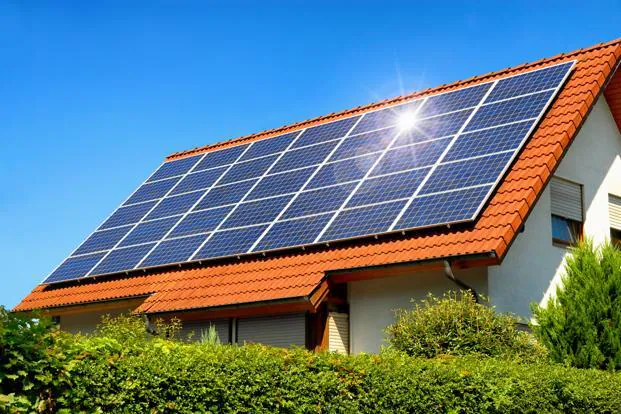
- Where panels can go: roofs, building walls (façades) and elevated structures on the ground with at least 8 ft clearance, inside your premises.
- Six arrangements: net metering, net billing, gross metering, group net metering, virtual net metering and behind-the-meter.
- Size limit: up to your sanctioned load; net metering is capped at 1,000 kW.
- Batteries: optional, not mandatory (the draft proposal to require them was dropped).
Want us to handle the BESCOM DSPV application for you? Call or WhatsApp +91 79750 09078.
What does DSPV mean, and why did SRTPV change to DSPV?
Under Karnataka’s 2016 regulations, grid-connected solar on homes and buildings was called SRTPV (Solar Rooftop Photovoltaic). In its order of 9 July 2025, KERC (the Karnataka Electricity Regulatory Commission) allowed façade-integrated panels on walls, mono-facial and bi-facial panels on roofs, and panels on elevated structures on the ground. Since the plants were no longer only on rooftops, KERC renamed them DSPV (Distributed Solar Photovoltaic).
The KERC (Grid Interactive Distributed Solar Photovoltaic (DSPV) Plants) Regulations, 2026 followed. They were notified on 19 August 2026 (Notification No. KERC/F-34/V-38/2026-27/2395) and published in the Karnataka Gazette on 24 August 2026, after a draft in June and a public hearing on 7 July 2026. They define a DSPV plant as a grid-connected solar system of up to 10 MW, with or without energy storage, that has anti-islanding protection. That safety feature switches the inverter off when the grid fails, so linemen are not put at risk.
The same rules apply in all five ESCOM areas, so DSPV means the same thing in Bengaluru (BESCOM) as it does in Kalaburagi or Ballari (GESCOM). The name SRTPV still appears on portal pages and older documents. For a homeowner the two terms mean the same thing.
The BESCOM DSPV portal: what you can do on it
BESCOM’s portal is still at srtpv.bescom.org, but the page is now titled “BESCOM | DSPV”. Under Online Service you will find:
- Non-subsidy: for businesses, institutions and homes not claiming the central subsidy.
- PM Surya Ghar (subsidy): register on the national portal (pmsuryaghar.gov.in) first, then submit the BESCOM application with your reference number.
- Virtual net metering and group net metering: separate application links (explained below).
- View application status, fast-track load enhancement and spot commissioning / synchronisation.
The portal also hosts the 2026 regulations, the Common SOP for DSPV, KERC tariff orders and draft PPA formats. BESCOM’s solar helpdesk is solar_helpdesk@bescom.co.in, or 080-22340815 / 16 / 17 / 19. For the full step-by-step application, see our BESCOM SRTPV online application guide.
The six DSPV metering options
The biggest change in the 2026 rules is the choice of arrangement. Here is what each one means, who can use it, and the size limits under clause 4 of the regulations.
| Arrangement | How it works | Who can use it | Size |
|---|---|---|---|
| Net metering | One bidirectional meter. Solar first covers your own use; surplus is bought by BESCOM at the PPA tariff, settled monthly. | All consumer categories | 1 kW to sanctioned load, max 1,000 kW |
| Net billing | Exported and imported units are valued separately, at the solar tariff and your retail tariff, with monthly settlement. | All categories | 1 kW to sanctioned load |
| Gross metering | All generation goes to the grid and is paid for at the tariff; your consumption is billed as usual. | All categories | 1 kW to sanctioned load |
| Group net metering (GNM) | One plant’s surplus is adjusted against your other connections in the same name and category. | All categories | 5 kW to combined sanctioned load |
| Virtual net metering (VNM) | One plant’s output is shared among several consumers of the same category, in agreed ratios. | Domestic incl. apartments, housing societies, charitable and government buildings, schools | 5 kW to combined sanctioned load |
| Behind the meter (BTM) | For self-consumption only; no payment for export. | All categories | Up to sanctioned load |
Source: KERC DSPV Regulations, 2026, clauses 4.1–4.7 and 5 (available on the BESCOM DSPV portal).
Which option should a Bengaluru home choose?
For an independent house, net metering is almost always the right choice. Every unit you use from your own panels saves you the full retail rate of about ₹5.80 plus taxes. Only the surplus is paid at the lower solar tariff. Net metering is also the arrangement the PM Surya Ghar subsidy route is built around. Under clause 4.1.3 you can move from net metering to net billing, gross metering or BTM only once, so it is worth getting the size right at the start.
Apartments and housing societies: virtual net metering
VNM is the option that matters most for Bengaluru apartments. One plant on the common terrace (or anywhere else in BESCOM’s area) can be shared among residents’ own connections and the common-area connection, in ratios set out in the agreement. Everyone in the group must be in the same consumer category. The plant must be at least 5 kW, and smart meters are needed at both the generation and consumption ends, at the consumer’s cost. Surplus under VNM is paid at 75% of the generic DSPV tariff, so sizing to the group’s daytime use matters even more. See apartment and RWA rooftop solar in Bangalore for how RWAs usually approach this.
Owners with several connections: group net metering
GNM suits someone who owns, say, a house plus a separately metered rental floor, or a business with several meters, all in the same name and category. One rule catches people out: the connection where the plant sits must use at least 20% of the energy generated each month. Any shortfall below that 20% is treated as lapsed energy and is not paid for. Surplus credited to the other connections is valued at 75% of the generic tariff.
What BESCOM pays for exported units under DSPV
KERC’s tariff order of 25 August 2026 fixes the rate for DSPV plants commissioned between 25 August 2026 and 30 June 2029. The rate stays the same for the 25-year agreement.
| System | Export rate per unit |
|---|---|
| Homes, 1 to 10 kW, without subsidy | ₹3.89 |
| Homes with PM Surya Ghar subsidy, 1 to 2 kW | ₹1.96 |
| Homes with PM Surya Ghar subsidy, above 2 up to 3 kW | ₹2.14 |
| Homes with PM Surya Ghar subsidy, above 3 kW | ₹2.58 |
| Virtual or group net metering | 75% of the applicable rate |
Two points to note. First, exported units offset only your energy charges. The fixed charge, tax and surcharges on your bill still apply. Second, the export rate is well below what you pay for grid power, so a system sized for your own daytime use pays back faster than an oversized one. The subsidy itself is ₹30,000 per kW for the first 2 kW and ₹18,000 for the third kW, capped at ₹78,000. For more data, see our Karnataka rooftop solar 2026 figures, and for system prices, the rooftop solar cost in Bangalore price list.
Other DSPV rules worth knowing
- Batteries are optional. The June 2026 draft proposed mandatory storage for larger systems; the final regulations let consumers add a hybrid inverter and battery “at their option”. KERC will review this after two years or once Karnataka reaches 3 GW of DSPV, whichever comes first. If you want backup during power cuts, see hybrid solar in Bangalore.
- Clear your arrears first. Consumers with pending dues to BESCOM are not eligible to install a DSPV system.
- Size cannot exceed sanctioned load. If you want a bigger plant, apply for load enhancement first; the portal has a fast-track option.
- Transformer capacity. For plants under 150 kW, total solar on your distribution transformer cannot exceed 80% of its rating. In dense Bengaluru layouts this is sometimes why an application is held up.
- Elevated structures need 8 ft clearance at the lowest point and must be within your premises.
- RESCO (third-party ownership) is allowed. A company can own the plant on your roof under a direct agreement with you; the PPA with BESCOM stays in your name.
- Behind-the-meter plants must still be reported. If you do not tell BESCOM about a BTM installation within three months, the penalty is ₹1,000 per kW.
For the checklist of roof space, documents and meter, read rooftop solar requirements in Karnataka. If your connection is with GESCOM, the same DSPV rules apply on a different portal; see the GESCOM SRTPV guide.
Frequently asked questions
What is BESCOM DSPV?
DSPV stands for Distributed Solar Photovoltaic. It is the name BESCOM and KERC now use for grid-connected solar plants on roofs, walls or elevated structures, which were earlier called SRTPV. Applications are made on the BESCOM DSPV portal at srtpv.bescom.org.
Is DSPV different from SRTPV?
Only in name and scope. KERC renamed SRTPV plants as DSPV in July 2025 because panels can now go on walls and raised ground structures, not just roofs. The 2026 DSPV regulations added more metering options, but the application and the 25-year agreement work much as before.
Which DSPV option suits a house in Bangalore?
Net metering, in most cases. Solar covers your own use first, which saves the full retail rate, and only the surplus is paid at the solar tariff. It also fits the PM Surya Ghar subsidy route. You can switch arrangement only once, so size the system for your consumption.
Is a battery mandatory under the DSPV regulations 2026?
No. The draft proposed storage for larger systems, but the final regulations made batteries optional. KERC will review the question after two years or when Karnataka reaches 3 GW of DSPV capacity.
Can apartment residents share one solar plant under DSPV?
Yes, through virtual net metering. Domestic consumers, including residents of an apartment and the common-area connection, can share one plant of 5 kW or more. Surplus is paid at 75% of the generic tariff, and smart meters are needed at both ends.
How do I check my BESCOM DSPV application status?
Open srtpv.bescom.org and choose View Application Status, then enter your application details. If it is stuck, the usual causes are a capacity above sanctioned load, a name mismatch on the bill or transformer capacity; the BESCOM solar helpdesk (080-22340815) can tell you which.
Let Eltron handle your BESCOM DSPV application
Free site survey with 3D shadow analysis, choice of metering option, system design, BESCOM DSPV paperwork, installation and PM Surya Ghar subsidy claim, from our HRBR Layout, Kalyan Nagar office.
One Comment