
How Long Do Solar Panels Last in Indian Weather? Lifespan, Warranty & Real Performance
One of the most common concerns from first-time solar buyers in India isn’t price or subsidy — it’s longevity. “Will these panels actually last 25 years in Bangalore’s monsoons and Delhi’s summers? Or am I buying something that’ll be a heap of dead silicon in 8 years?”
It’s a reasonable question, and the honest answer is more nuanced than the marketing brochures suggest. Properly-installed Tier-1 solar panels do last 25+ years in Indian weather. But “properly installed” is doing a lot of work in that sentence, and the field data on Indian residential solar shows a wide gap between systems that hit their warranty performance and systems that degrade faster than they should.
This guide covers what manufacturers actually warrant, what the field data says about real-world Indian performance, what causes premature degradation in Indian conditions specifically, and how to evaluate whether a particular installation will deliver its full 25 years.
What Manufacturers Actually Warrant
Tier-1 solar panel manufacturers (Waaree, Vikram Solar, Tata Power Solar, Adani Solar, Premier Energies, Goldi Solar, and the international Tier-1 brands like LONGi, JinkoSolar, Trina Solar, Canadian Solar) all offer two distinct warranty types:
- Product warranty: 10–12 years (some premium panels: 15–25 years). Covers defects in materials and manufacturing. If a panel develops cracks, delamination, hot spots, or other manufacturing defects within this window, it’s replaced.
- Performance warranty: 25–30 years. Guarantees the panel will produce at least 80% of original rated output at year 25. Year 1: typically 97–98% guaranteed. Then linear degradation of roughly 0.4–0.55% per year. Premium panels guarantee tighter degradation curves (e.g., 87% at year 25).
These warranty numbers reflect what manufacturers will defend in writing — not the panels’ theoretical maximum lifespan. The actual physical lifespan of well-built silicon photovoltaic panels exceeds 30 years; many panels installed in the late 1980s are still operational at 75–80% of original output today.
Real-World Performance in Indian Conditions
Field studies of installed Indian rooftop solar systems tell a more complicated story. A landmark study by the Council on Energy, Environment and Water (CEEW) in partnership with PV Diagnostics found that approximately 50% of Indian rooftop solar systems underperform their expected generation by 30% or more.
That underperformance isn’t because the panels themselves are dying early. It’s because the system isn’t being maintained, isn’t installed correctly, or uses lower-quality components than the marketing claimed. The actual panel degradation in well-installed Indian systems remains within the 0.5–0.7% per year range that manufacturers warrant.
In other words: panels last as advertised. Systems often don’t.
What Causes Premature Degradation in Indian Conditions
The specific environmental stresses that affect Indian rooftop solar performance:
1. Extreme heat (the biggest factor)
Solar panels are rated at 25°C cell temperature, but in Indian summers panels regularly reach 65–75°C on the back surface. Every degree above 25°C reduces output by approximately 0.4–0.5%. So a panel running at 65°C produces about 16–20% less power than its nameplate rating.
This is a temporary effect (panels cool overnight) and doesn’t cause permanent degradation in well-built panels — but sustained high temperatures combined with thermal cycling (hot days, cool nights) cause microcracks in cheaper panels with weaker encapsulation. Tier-1 panels are tested for thermal cycling tolerance; Tier-3 panels often aren’t.
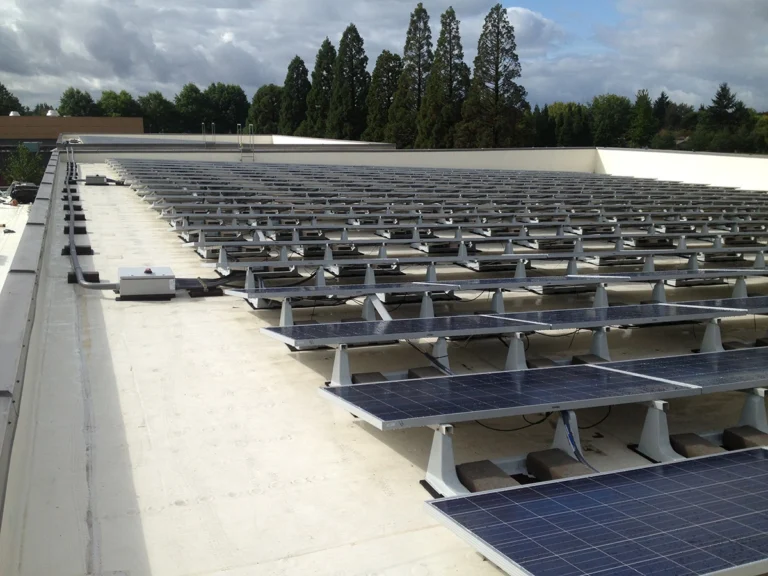
Mitigation: proper installation with adequate roof-to-panel clearance (4–6 inches minimum) allows airflow that significantly reduces operating temperature. Tightly mounted panels with no airflow run 10–15°C hotter and degrade faster.
2. Monsoon humidity and water ingress
Indian monsoons subject panels to weeks of constant humidity and rainfall. Properly sealed Tier-1 panels are rated IP67 or IP68 (fully dust and water resistant) and handle this fine. Lower-quality panels develop seal failures over time — water enters the panel, corrodes internal connections, and causes “snail trail” patterns visible on the front of the panel.
Once water ingress occurs, panel output drops permanently. There’s no field-repair option — affected panels must be replaced.
3. Dust accumulation
Indian air, particularly in summer and pre-monsoon, carries significant dust loads. Accumulated dust on panel surfaces can reduce output by 15–30% if not cleaned. The CEEW study found dust accumulation as the single largest performance loss factor in Indian rooftop solar, affecting 80%+ of systems studied.
Mitigation is simple but neglected: regular cleaning every 4–8 weeks (more often if you’re near major roads, construction zones, or in dry regions). Modern panels with anti-soiling glass coatings reduce cleaning frequency but don’t eliminate it.
4. Bird droppings and biological soiling
Bird droppings cause localized hot spots when they shade individual cells — those cells generate heat instead of electricity, which can damage the panel’s encapsulation over time. Found in roughly 80% of unmaintained systems.
Mitigation: regular cleaning, and on roofs with significant bird traffic, bypass diodes properly working in each panel section will isolate hot-spot zones and prevent damage propagation.
5. Cyclones, hail, and extreme weather
Coastal regions experience cyclonic winds; northern and central regions experience hailstorms. Tier-1 panels are rated for 5400 Pa snow load and 25 mm hail at 23 m/s impact velocity, which handles most Indian weather. Mounting structure quality matters more than panel quality here — a panel rated for 200 km/h winds is useless if it’s mounted on under-spec’d steel that twists at 80 km/h.
6. Voltage instability and grid issues
Indian grid voltage fluctuates more than international averages. Inverters need surge protection and proper earthing to handle voltage spikes without damage. Cheap inverters fail within 3–5 years due to grid stress; quality inverters (Sungrow, Growatt, Fronius, SMA) last 8–12 years before requiring replacement.
Note that the inverter is the most likely component to need replacement during the 25-year system life — typically once, sometimes twice. Replacement cost in 2026 for a 5 kW inverter: roughly ₹40,000–₹70,000.
The Components That Will and Won’t Last 25 Years
To set realistic expectations:
- Solar panels (Tier-1): Will last 25+ years with output gradually declining to ~80% by year 25. May continue functional well past 30 years at reduced output.
- Mounting structure (hot-dip galvanized iron): Designed for 25+ year service. Painted/non-galvanized steel rusts within 3–5 years.
- String inverter: 8–12 years. Plan for at least one replacement during system life.
- Microinverters: 20–25 years (longer warranty than string inverters).
- DC and AC cables (proper rated): 25+ years. Under-sized or improperly insulated cables degrade faster.
- Junction boxes, isolators, surge protection: 15–20 years.
- Lithium batteries (if hybrid system): 8–15 years depending on chemistry and cycling pattern.
So a “25-year system” really means: 25 years of panel operation, with one inverter replacement and possibly some balance-of-system component replacements over time. Total lifetime maintenance cost on a residential system: typically ₹50,000–₹1.2 lakh in addition to the initial installation, spread across the system’s life.
How to Maximize Your System’s Lifespan
Five factors disproportionately determine whether you’ll see 25 years of strong output or whether your system will be limping by year 12:
Buy Tier-1 panels — not “Tier-1 equivalent”
Tier-1 status is determined by Bloomberg New Energy Finance based on bankability and manufacturing scale. There’s a specific list, and “Tier-1 equivalent” is a marketing phrase, not a category. Insist on the actual brand and model in writing on your quote.
Insist on proper installation
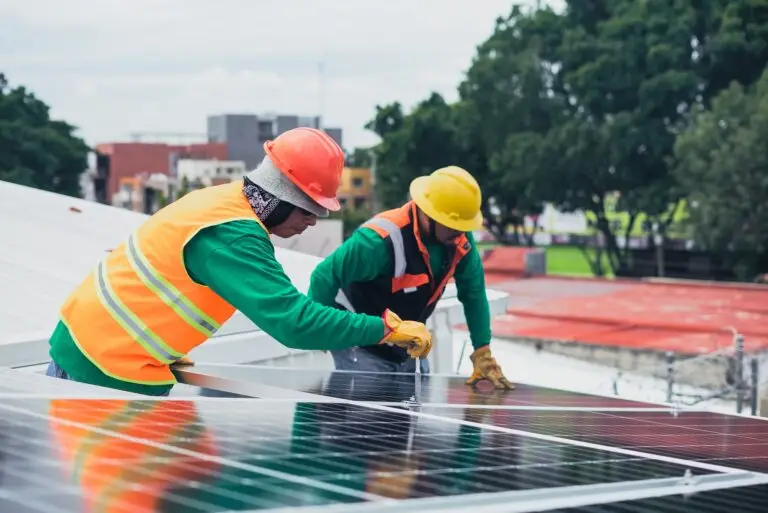
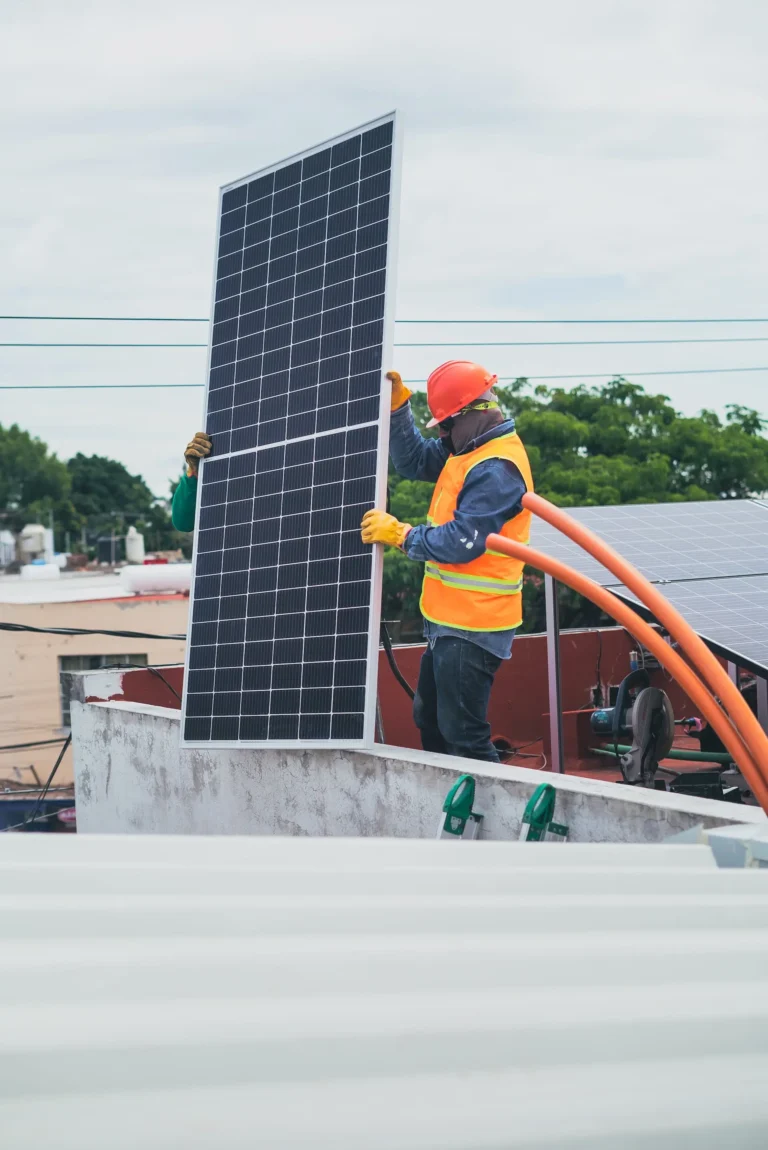
Adequate panel-to-roof airflow gap, hot-dip galvanized mounting structures, properly torqued fasteners, IEC-compliant electrical work, surge protection, and proper earthing. Most premature degradation in Indian systems traces to installation shortcuts, not panel defects.
Maintain regularly
Monthly inspection (visual check for bird droppings, dust accumulation, anything physical), cleaning every 4–8 weeks, annual professional inspection for electrical connections and torque retention. This is mundane but critical work that delivers more lifetime performance than any premium component upgrade.
Monitor generation actively
Every modern system should include a monitoring dashboard showing daily, monthly, and annual generation. If output drops more than 10–15% below expectations for the season, something is wrong — and catching it early prevents cascading damage. Most installer-maintained systems include monitoring; some don’t, which is a reason to ask before signing.
Use the warranty support
Performance warranty claims require documented evidence of underperformance and proper installation. If your installer isn’t tracking generation or doesn’t have professional inspection records, warranty claims become hard to enforce. Working with an installer who maintains performance records is part of buying the warranty.
The Bottom Line
Properly installed Tier-1 solar panels do last 25 years in Indian weather. The panels themselves are robust enough for any climate India presents. What kills systems early is some combination of: lower-tier components passed off as Tier-1, shoddy installation that traps heat or allows water ingress, lack of maintenance, and inverter failures that aren’t caught quickly.
If you buy quality components, insist on quality installation, and maintain the system reasonably, your rooftop solar will deliver 25 years of strong performance — paying for itself in years 3–4 and generating essentially free electricity for the remaining two decades.
Eltron Energy uses only Tier-1 panels and reputed inverter brands, with hot-dip galvanized iron mounting structures and proper installation practices. Every installation is backed by the Eltron Assure program — 5 years of guaranteed performance with active monitoring and maintenance, with compensation if your system underdelivers. Get in touch for a free site survey and a written quote that specifies every component by brand and model.
One Comment