
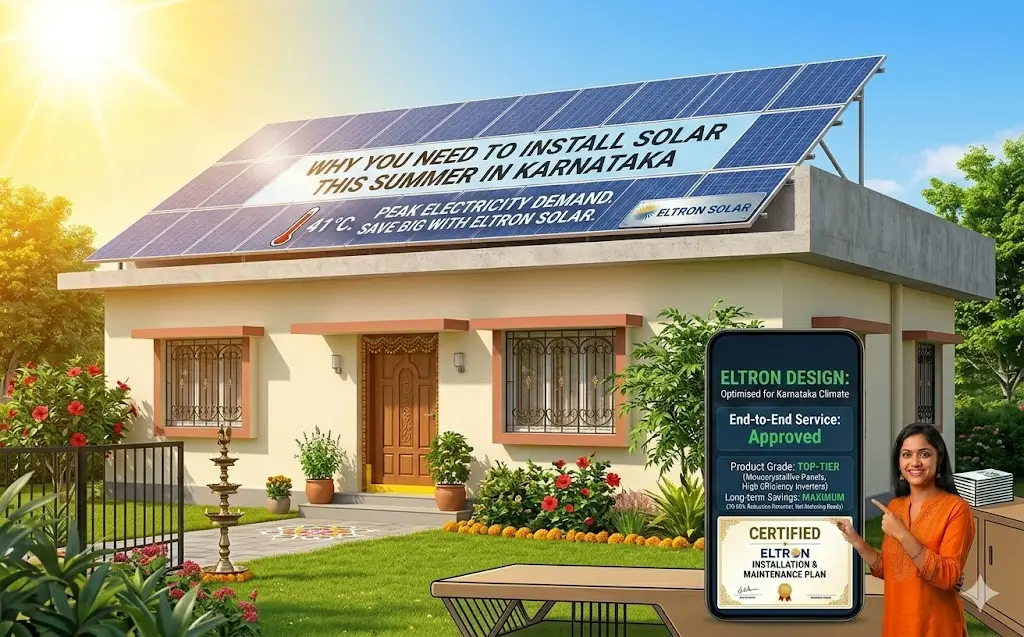
Why You Need to Install Solar This Summer in Karnataka
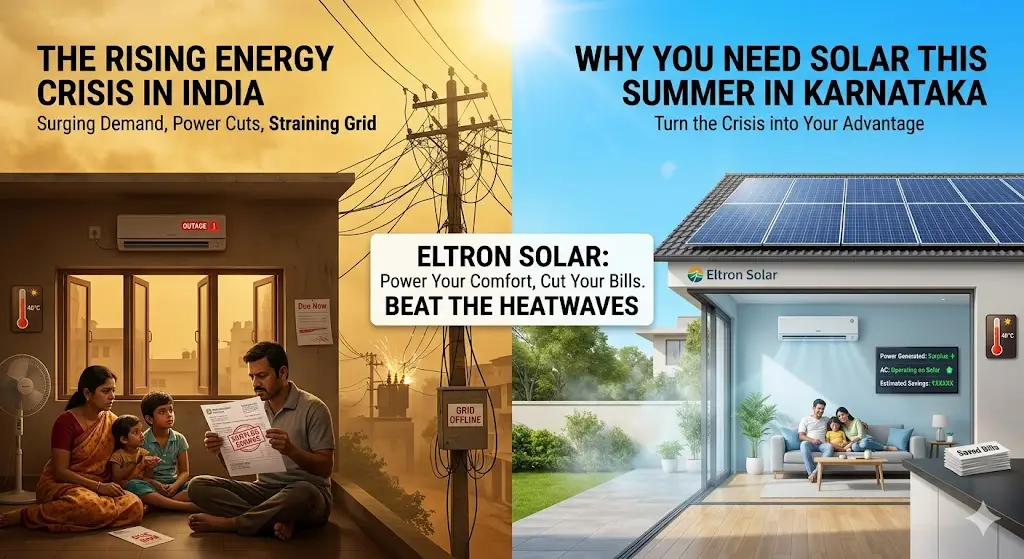
The Rising Energy Crisis in India
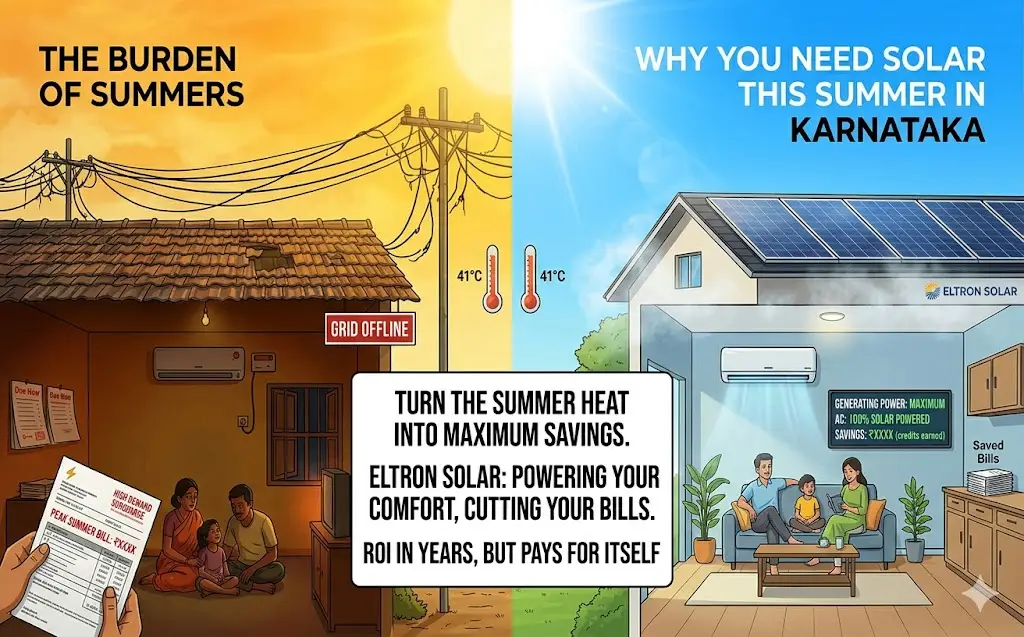
Increasing Electricity Demand in Summers
If you’ve ever checked your electricity bill during summer, you already know—it’s not just “slightly higher,” it’s often shocking. And you’re not alone. Across India, electricity demand is growing rapidly due to rising temperatures, increased use of air conditioners, and expanding urban lifestyles. According to recent energy reports, electricity demand is being driven heavily by cooling needs, with air conditioning alone consuming a significant portion of power capacity.
In southern states like Karnataka, summers can be intense, especially in cities like Bangalore where residential and commercial usage peaks. During peak heat waves, power demand surges so high that utilities struggle to keep up. This leads to higher tariffs, occasional outages, and increased dependency on expensive electricity sources. Imagine running your AC all day just to stay comfortable and then receiving a bill that feels like a punishment.
This is where solar energy steps in as a game-changer. Instead of depending entirely on the grid, you generate your own power when you need it the most—during sunny days. And the best part? Summer, which causes your electricity problems, also becomes your biggest advantage
Rising Power Costs and Bills
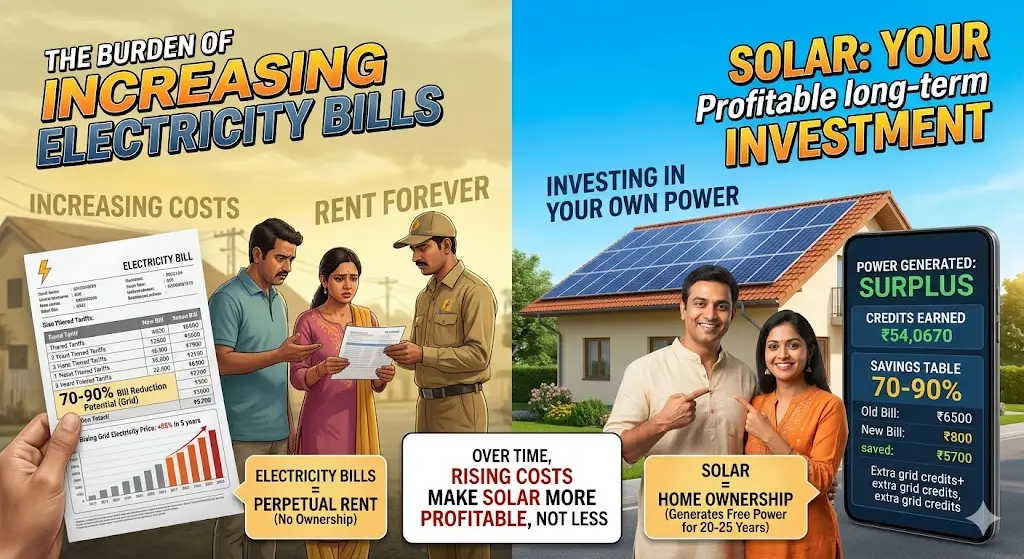
Electricity prices in India have been steadily increasing due to fuel costs, infrastructure upgrades, and demand-supply imbalances. Traditional power sources like coal are becoming more expensive and environmentally unsustainable. Meanwhile, renewable energy especially solar is becoming cheaper and more accessible.
Think about it like this: would you rather keep paying rent forever or invest in your own house? Electricity bills are like rent you pay every month, but you never own anything. Solar, on the other hand, is an investment. Once installed, it keeps generating free electricity for 20–25 years.
In fact, many households that switch to solar report up to 70–90% reduction in electricity bills, especially when combined with net metering. That means your system can even send extra electricity back to the grid and earn credits. Over time, rising electricity costs actually make solar more profitable not less.
Government Support and Subsidies
One of the biggest reasons solar adoption is booming is strong government support. Schemes like rooftop solar subsidies and initiatives such as PM Surya Ghar have already helped over 24 lakh households install solar systems across India.
These programs significantly reduce the upfront cost, making solar affordable even for middle-class households. Subsidies can cover a substantial portion of installation costs, especially for smaller residential systems.
And it doesn’t stop there. Policies like net metering allow you to sell excess electricity back to the grid, effectively turning your home into a mini power plant. It’s like having a side income stream powered by sunlight.
Why Summer is the Best Time to Install Solar?
Maximum Sunlight Advantage
Let’s be honest—summer can feel unbearable. But from a solar perspective, it’s the perfect season. Long days, clear skies, and intense sunlight mean your solar panels operate at peak efficiency.
Recent reports show that solar power generation reaches record highs during summer months, contributing significantly to electricity supply and reducing reliance on expensive power purchases.
So while others struggle with high bills, your solar system is working overtime—producing maximum energy when you need it most.
Faster ROI During Peak Usage
Return on Investment (ROI) is one of the biggest concerns for homeowners. But here’s the trick: the more electricity you use, the faster your solar system pays for itself.
Summer is when electricity usage peaks ACs, coolers, refrigerators, and fans run almost all day. That means your solar system offsets a huge chunk of your bill immediately. Instead of waiting years, you start seeing real savings within months.
Solar Power in Karnataka – A Golden Opportunity
Weather Conditions Perfect for Solar
Karnataka is one of the best states in India for solar energy. With abundant sunlight throughout the year, it offers ideal conditions for high energy generation.
State Incentives and Net Metering
Karnataka also supports solar adoption through net metering policies, making it easier for homeowners to benefit financially from their systems.
Why Choose Eltron Solar for Installation
Local Expertise in Karnataka
Eltron Solar understands the local climate, regulations, and customer needs. That means better system design and higher efficiency.
End-to-End Service
From consultation to installation and maintenance, everything is handled professionally.
High Quality Products
Using top-grade panels and inverters ensures long-term performance and reliability.
Cost vs Savings Breakdown
Installation Cost Overview
A typical residential solar system (3–5 kW) can cost between ₹1.5 lakh to ₹3 lakh after subsidies, depending on system size and quality.
Long-Term Savings Table
| System Size | Avg Cost | Monthly Savings | 25-Year Savings |
|---|---|---|---|
| 3 kW | ₹2L–₹2.30L | ₹3,000–₹5,000 | ₹10L+ |
| 5 kW | ₹3L–₹3.30L | ₹6,000–₹8,000 | ₹20L+ |
Conclusion
Solar is no longer just an option—it’s becoming a necessity. With rising electricity costs, increasing demand, and strong government support, there has never been a better time to switch. And when you combine all that with the advantages of summer—maximum sunlight, higher savings, and faster returns—it becomes a no-brainer.
If you’re in Karnataka and thinking about going solar, now is the moment. The sun is literally offering you free energy every day—why not use it?
FAQs
1. How much can I save with solar in Karnataka?
You can save up to 70–90% on your electricity bills depending on system size and usage.
2. What is the lifespan of a solar system?
Most systems last 25+ years with minimal maintenance.
3. Is subsidy available in Karnataka?
Yes, central government subsidies are available for residential installations.
4. Does solar work during power cuts?
Only if you install a battery backup system.
5. How long does installation take?
Typically 2–7 days after approvals.